What does a pastry chef do?
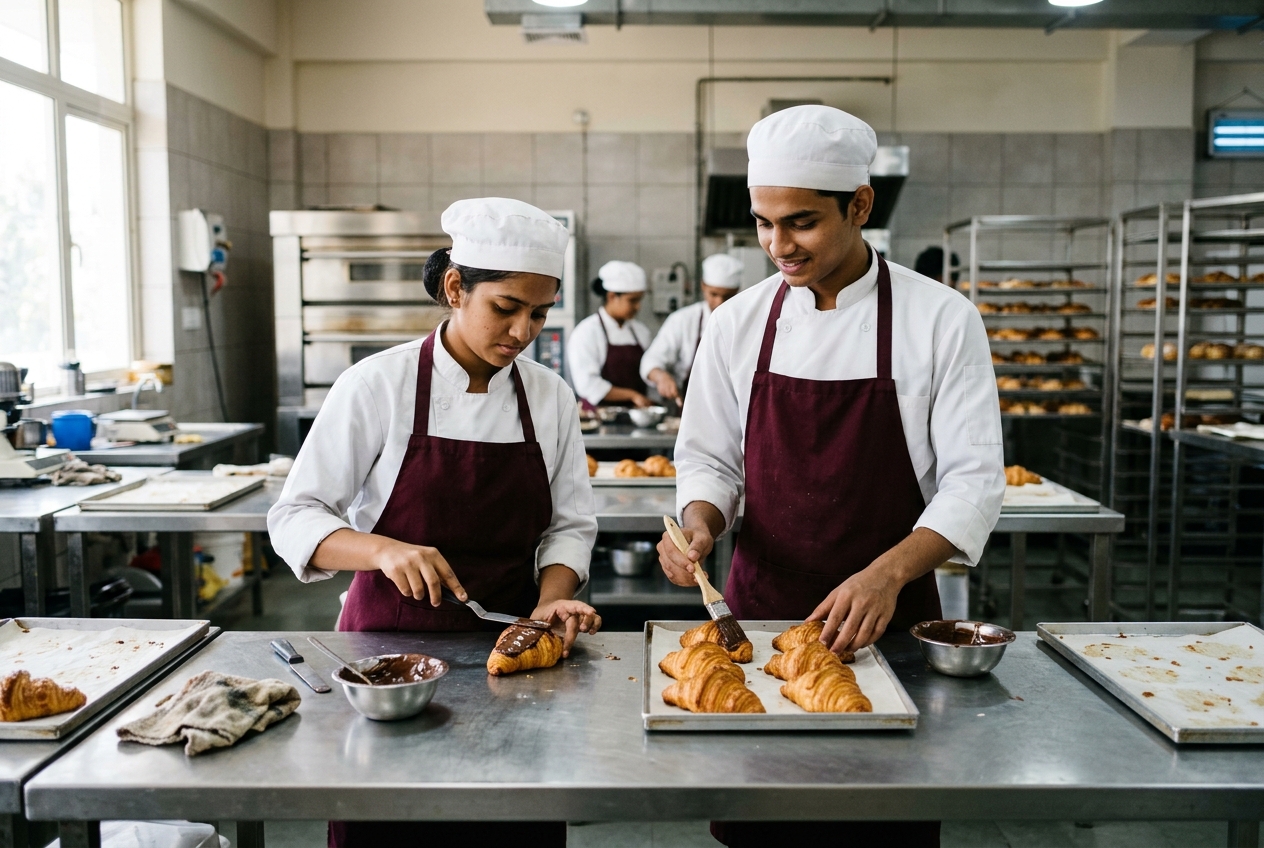
A pastry chef prepares breads, cakes, tarts, laminated doughs, creams, desserts and chocolates. In a hotel, pastry is a separate kitchen section that supports restaurants, banquets and room service. Baking is exact work. Ingredients are weighed, temperatures are controlled, and timing matters, so pastry rewards patience and precision as much as creativity.
Six steps to become a pastry chef in India
Step 1: Decide where you want to work
Pastry chefs work in hotels, resorts, standalone bakeries, cafés, dessert studios and their own businesses. Your choice shapes the training you need. Hotel pastry kitchens work to fixed standards, so formal training helps a great deal.
Step 2: Choose your training route
When people ask how to become a pastry chef in India, there are three common routes:
• Certificate Course in Bakery and Patisserie (9 months): A short, focused programme for students who already know they want pastry.
• Degree (3 years): The B.Sc. Culinary Arts follows 10+2 and covers knife skills, bakery and patisserie, HACCP food safety, French, Indian regional, Pan Asian and European cuisines, menu engineering, food styling and photography, and kitchen cost control. It suits students who want the full kitchen picture first.
• Learning on the job: Possible, but slower and less structured, especially for food safety and costing.
For the wider chef picture, read our guide on how to become a chef in India.
Step 3: Learn the core skills
A good pastry chef course builds these skills:
• Accurate weighing and scaling
• Dough science and fermentation for breads
• Laminated doughs such as croissant and puff pastry
• Cakes, sponges, creams and custards
• Entremets and plated desserts
• Chocolate work and tempering
• Food safety, hygiene and HACCP
• Costing and portion control
Step 4: Practise in real kitchen conditions
Reading recipes is not enough. Pastry needs repetition, speed and consistency. Good pastry chef training includes a working training bakery, regular practical sessions and internship exposure, because hotel pastry kitchens expect tidy mise en place and steady output.
Step 5: Start as a commis and grow
Most pastry careers begin at the bottom of the section and rise with skill. A typical ladder looks like this:
• Commis pastry: prepares ingredients, assists on the section and learns the standards.
• Chef de partie, pastry: runs a station such as breads, cakes or plated desserts.
• Pastry sous chef: manages the section day-to-day, including ordering and scheduling.
• Executive pastry chef: plans dessert menus, controls costs and leads the team.
Growth depends on skills, experience, property type and city. Many pastry cooks later open bakeries or dessert brands, which needs business sense and FSSAI registration or licence.
Step 6: Build a portfolio and keep learning
Photograph your best bakes, note the techniques you have mastered and keep adding new ones, from sourdough to sugar work. A simple portfolio shows a chef your consistency before you say a word.
How VMSIIHE, Goa trains pastry and bakery students
VMSIIHE, Goa, is “An Autonomous Institute Affiliated to Goa University” and is “Accredited by NAAC with A Grade”. Its 3-year B.Sc. Culinary Arts covers fundamental and advanced pastry techniques, artisanal breads, desserts and chocolates, along with flavour profiling, plating and international food safety. Students train in an in-house training kitchen, a training bakery and a live demo kitchen with a big screen. The institute also lists internship opportunities with leading hospitality companies and international partners, alongside its 9-month certificate course in bakery and patisserie.
How to choose a pastry chef course
Ask these questions before you enrol:
• Is there a working training bakery, not only demonstrations?
• Is the syllabus clear on breads, pastries, cakes, chocolates, plating and food safety?
• Are there regular practical sessions and internship exposure?
• Can you verify the accreditation and recognition?
• Are fee details and inclusions given in writing?
Our recommendation
If you are sure about pastry and want a wider kitchen foundation before you specialise, the B.Sc. Culinary Arts gives you more room to grow. Whichever you choose, visit the training kitchens, ask for the full syllabus and judge the course by how much real practice it gives you.
 V. M. SALGAOCAR INSTITUTE
of International Hospitality Education
[An Autonomous Institute Affiliated to Goa University]