
Plant-Based Menus: How Chefs Are Reimagining Goan Cuisine for Modern Guests
Plant-forward dining is no longer a niche or simply a preference, but a fact across the hospitality industry. The contemporary hospitality trend report explains that plant-forward menus are motivated by more than just a movement toward rigid vegetarianism; the growing demand by the guest towards choice, flavour, inclusion, and sustainability. Simultaneously, edited menus, the less but better mentality, and ingredient disclosure are influencing the way restaurants package their food items in 2026.
This change brings about new opportunities to the local cuisines, such as Goan cuisine. Locally sourced, with its stratified flavours, their cultural identity, and their flavour wholesomeness, Goan food already contains numerous points that organically transform to plant-based reinterpretation. Coconut, kokum, tamarind, local vegetables, cashew, jackfruit, spices and lentils provide cooks with an extensive creative foundation to construct dishes that are both authentic and modern.
To modern chefs, it is not the objective to eliminate tradition. It is to reinterpret it thoughtfully. Plant-forward menus in Goa are all about taking vegetables and plant ingredients as seriously as meat or seafood-centered dishes were regarded before. This transformation is assisting chefs to communicate to the current guests, yet retain the spirit of Goan food.
What Does “Plant-forward” Really Mean?
More Than Vegetarian or Vegan
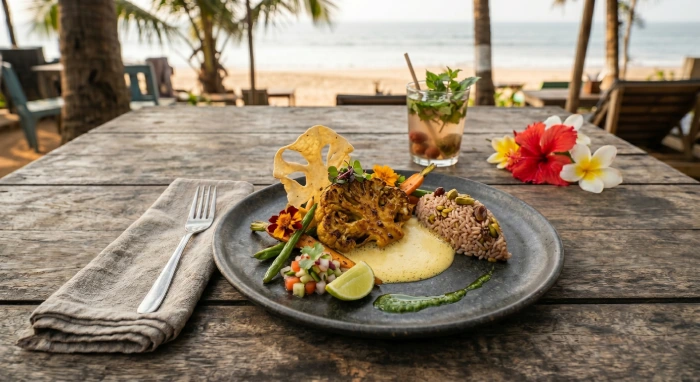
Plant-forward does not imply that a menu has to be all vegetarian or vegan. Rather, it implies that plants lead. Vegetables, legumes, grains, fruits, nuts, and seeds are the center of the plate and animal ingredients, when they are used at all, have a supporting role. Hospitality reporting 2026 indicates that customers are demanding less restrictive menus and more inclusive and flexible menus.
Why It Is Important to the Contemporary Visitors.
The current visitors seek flavour, freshness, variety and more considerate menu options. The increasing health awareness, sustainability issues, and altered eating patterns are all pushing restaurants to reconsider the construction of dishes. According to trend coverage 2026, there is also an increasing interest in curated menus and intentional dining whereby the guest is interested in quality, craft, and transparency rather than high volumes and repetitiveness.
The Reason Why Goan Cuisine is Ideally positioned to be plant-forward.
A Cuisine based on powerful plant components.
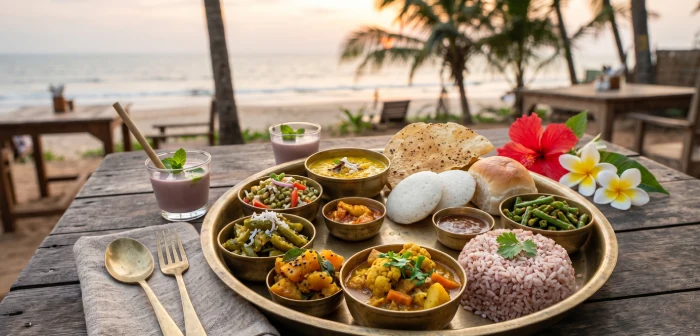
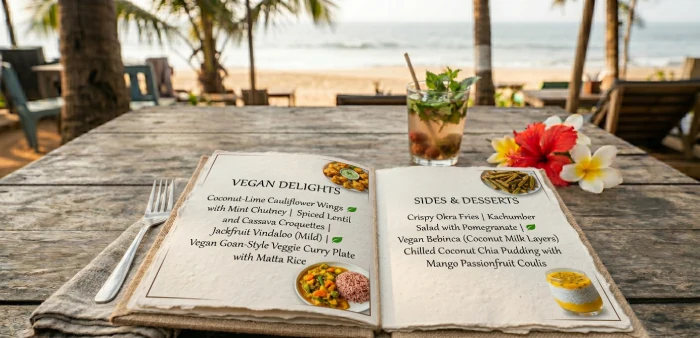
Traditional Goan cuisine is also vegetarian in nature although Goan is more related to seafood and meat products. The staple and most important ingredients include coconut, kokum, tamarind, cashew, local vegetables, pulses, rice, and jaggery, which have traditionally influenced the cuisine of the region. The food pages of Goa Tourism showcase foods such as kaju curry and explain how coconuts, onions, garlic, spices, and tamarind are roasted to be used in traditional cooking.
Sour, Spice, and Sweet.
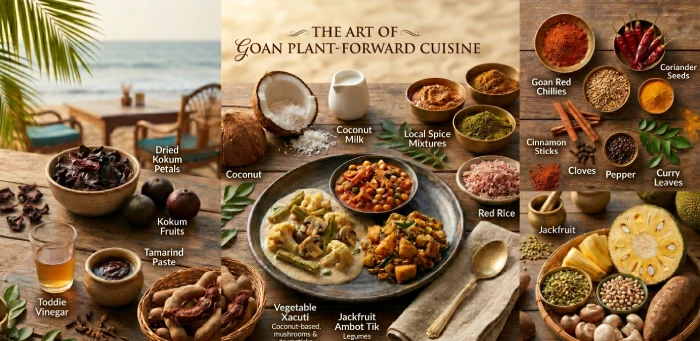
The naturally bold flavour structure of Goan cuisine is one of the reasons why it lends itself to plant-forward cooking. The food is characterized by a balance of heat, tanginess, sweetness, and richness with the use of kokum, vinegar, tamarind, coconut, and local spice mixtures. Since no single protein determines the flavour of Goan food, its chefs can vary dishes with vegetables, legumes, mushrooms, yam, or jackfruit, yet maintain a characteristic of the landscape.
The way Chefs are reinventing Goan food.
Reinventing Traditional Curries
Contemporary cooks are redefining the Goan staples by turning the focus towards the food. They are not considering vegetables as sides, and instead they are making main dishes of pumpkin, domestic greens, mushrooms, jackfruits, breadfruits, cashews and lentils. An xacuti style dish, such as that based on roasted vegetables or mushrooms, can be made using seasonal ingredients, but still retain its local character, and a curry made of coconuts can be made using local produce. This practice is in line with the plant-forward trends where inclusion is flavour-driven and not imitative.
Elevating Local Produce
Plant-centered menus can work best when the chefs go beyond eliminating meat. They need to take ingredients up a notch with technique, storytelling and presentation. Local produce in Goa provides the chefs with an advantage. The cashew fruit, raw jackfruit, local gourds, beans, leafy vegetables, coconut and kokum can be processed by roasting, slow braising, smoking, pickling or fermentation. The trend reports in the hospitality sector have indicated that clients are paying more attention to unique ingredients and considerate sourcing, which enhances the importance of regional produce even higher in 2026.
The latest update to the Guest Experience
There is also a re-invention of Goan cuisine by chefs in its presentation and menu language. A dish based on a classic village-like dish can be served in a more modern fashion, divided into tasting portions, or narrated to emphasize the local sourcing and cooking tradition. The changes allow traditional food to find its way to younger diners, wellness-focused travellers, and international visitors, who might not know much about Goan cuisine but would be interested in having regional, ingredient-driven foods. This aligns with larger trends of hospitality toward menus that are more curated and story-driven.
The implications of Plant-forward Menus on Hospitality Education
Tradition and Innovation Have to Co-operate.
To hospitality students, plant-forward cooking is not about following trends in an out-of-context manner. It is also about the possibility of how the culinary heritage can develop and remain in place. Goa presents a perfect case study as its food is already complex, ingredient-based, and rooted in culture. Students will be able to understand how to keep the authenticity and modernise dishes.
Skills Future Chefs Need
The increasing use of plant-forward menus will require that future chefs have more expertise in vegetable cooking, menu design, a sustainability mindset, and knowledge of local ingredients. They need to understand how to add depth, texture and fulfillment without overly depending on standard proteins. They should also be aware of the impact of the menu trends on the hospitality pricing, guest attraction, and branding. The latest trend reporting (2026) demonstrates that these are no longer optional skills.
The Future of Goan Cuisine on Modern Menus
Maintaining Personality and Growing It.
Goan cuisine is not going to die by forsaking its classics. It resides in expanding the discussion of what Goan food can be. Plant-based menus enable chefs to celebrate old ingredients in new forms, embrace a diverse group of customers, and make dishes that are rooted in the local but globally. Considerate innovation may elevate the regional cuisine and render it more resilient.
The Hospitality Industry of Goa has a great chance.
Plant-forward cuisine is a promising market opportunity to restaurants, hotels, and culinary establishments in Goa. It promotes contemporary food culture, the local sourcing approach, and enables a transformation of the local food culture without changing its essence. Chefs who reinvent Goan food with reverence and imagination are doing much more than a trend. They assist in shaping the future of the culinary identity of Goa.
Conclusion
In Goa, plant-forward menus do not have to feel imported or artificial, as they are transforming hospitality in 2026. The grounds of this evolution already lie in the cuisine itself. The Goan food provides a substantial ground on which chefs can innovate with its dependence on coconut, kokum, cashew, tamarind, rice, vegetables, and stratified spice blends.
The interesting aspect of this movement is that it unites tradition and change. Creating a more welcoming, modern, and engaging plate by putting plants in the middle of the plate and re-imagining well-known recipes, Goan cuisine is becoming more inclusive, contemporary, and engaging to modern visitors. This can be a valuable lesson to hospitality students and professionals that the future of food may be as simple as taking a closer look at the local cuisine.
FAQ"S
1. What is a plant-forward menu?
Plant-forward menu focuses on vegetables, legumes, grains, fruits, nuts, and seeds as the primary ingredients of the dish, with animal proteins, in case they are present, being of secondary importance.
2. Is Goan food inherently plant-based friendly?
Yes. Plant-forward reinterpretation is well suited to Goan cuisine, which already incorporates numerous powerful vegetal ingredients in its use of coconut, kokum, tamarind, cashew, rice, vegetables, and pulses.
3. Is plant-forward entirely vegan?
No. Plant-forward typically implies that plants are the main dish, however, it does not necessarily mean that the menu must be vegan. It is less of strict exclusion than emphasis.
4. What is the reason why chefs are redefining regional food to modern audiences?
Chefs are adapting to shifting guest demands in the areas of health, sustainability, diversity and bespoke dining experiences and retain regional character.
5. Why is this subject important to hospitality students?
It assists students in realizing how culinary traditions, menu trends, ingredient expertise, and innovation are integrated in contemporary hospitality practice.