AI in Hospitality: Skills Students Need for the Future Hotel Industry
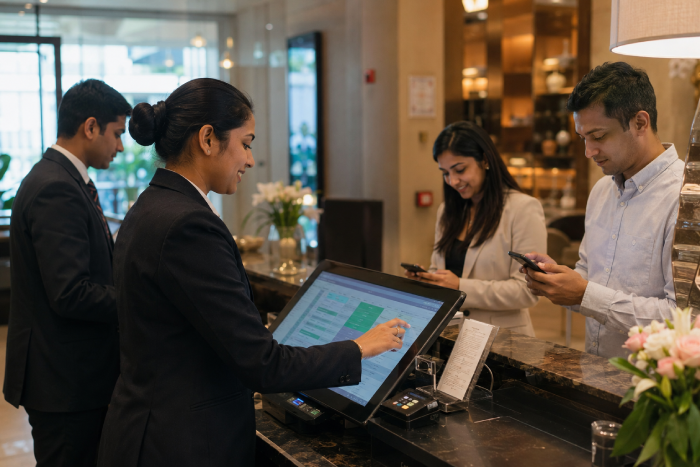
Gradually and surely, artificial intelligence is revolutionising the way hotels, resorts, restaurants, and other tourism enterprises run their business.
It doesn’t imply that hospitality won’t remain human any more than that. The fact of the matter is that the future hospitality sector will require specialists having an ability to blend technology with customer service, communications, emotional intelligence, and decision-making abilities
If you are a student of hotel management and have plans to join the profession in the future, it is essential to get educated on AI for career readiness.
VMSIIHE in Goa is known to deliver hospitality programs with relevant training, industry exposure, internships, and skill-based learning. Connect now to learn about hospitality courses best suited for your career.
AI and Importance for Hospitality Industry
The hospitality industry has always been all about guest experience. Even if technology helps deliver that experience, the fact remains that there will always be a requirement of professionals well-trained for the purpose.
Examples where AI is increasingly being adopted in hospitality include:
- booking assistance
- communication with guests
- feedback analysis from customers
- demand predictions
- earning management
- personalized suggestions
- efficiency of operations
- inventory control
The World Economic Forum’s Future of Jobs Report 2025 says that employers think the skills people use at work will be different by 2030. This is because technology, Artificial Intelligence and automation are changing the kinds of jobs people do.
For students who want to work in hospitality, this means that just knowing about hospitality is not enough. They also need to be able to work with technology and still give service to people.
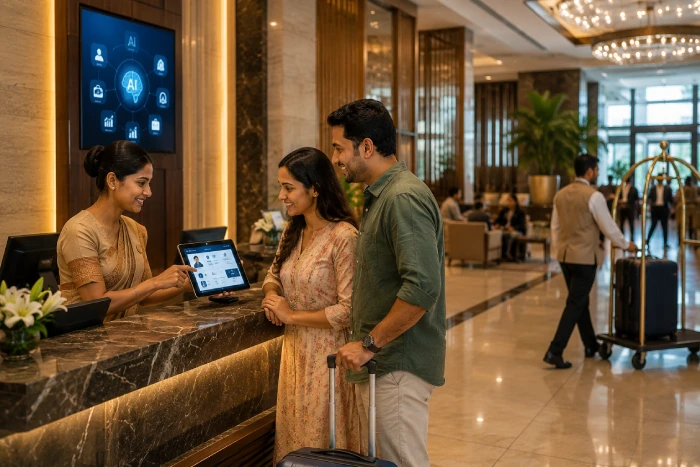
Artificial Intelligence Will Help Hospitality Not Take Its Place
When someone stays at a hotel, they might use a phone app to see if a room is available, get answers to their questions or get suggestions just for them. But if something goes wrong, they want to talk to a real person who can listen to them, understand what is wrong and fix the problem.
That is why the hospitality workers who will be the most valuable in the future are not the ones who are afraid of Artificial Intelligence. They are the ones who know how to use Artificial Intelligence in a way.
Artificial Intelligence can help with things like:
- réponding to people
- understanding data better
- making things run more smoothly
- keeping track of what guests like
- planning things better
But human workers are still important for things, like:
- being kind and caring
- taking care of guests
- fixing problems when things go wrong
- being a leader
- understanding different cultures
- making good decisions
This is where learning about hospitality becomes important. Students need to know about the hospitality industry. Also have skills that they can use in different situations. Hospitality students need to know about Artificial Intelligence. How to use it to give better service to people. They need to be able to work with Artificial Intelligence. Still be kind and caring to guests.
Skill 1: Digital Literacy
The first skill required by the students is digital literacy.
This does not mean that every hospitality student must become a software developer. What it entails is that the hospitality students are familiar with digital technologies, including hospitality software, booking websites, data analytics, and artificial intelligence-powered applications.
Future hotel professionals may have to deal with:
- hospitality software such as property management systems
- guest relationship platforms
- online booking systems
- feedback management applications
- chatbots powered by artificial intelligence
- revenue management software
By being digitally literate, students can prepare themselves better for future careers as hospitality professionals in front office, rooms department, sales and marketing, operations, and management areas.
Unlike other educational institutions that only focus on theoretical aspects of hospitality studies, VMSIIHE prepares the students for a career in the real world of hospitality. According to their website, VMSIIHE’s full-time programme prepares the students technically and operationally for the international hospitality industry.
Skill 2: Data-Driven Decision-Making
Hotels have a lot of information about the people who stay there, like what guests like, how many rooms are needed when people usually book, what guests think of the hotel, how much food costs, how full the hotel is and what problems happen.
If hotels use computers to look at all this information, it can make sense of it. People who work in hotels need to learn how to understand it, too.
For example
- Why do guests always complain about the things in hotels?
- What things make guests happy when they stay in hotels?
- When do people usually book rooms in hotels?
- What food do hotels sell that makes them a lot of money?
- What things slow down the work in hotels?
Students who can understand this information about hotels will be better at running the hotel, selling rooms, making money, managing the food and drinks and being in charge of the hotel.
This is because there are many hotels now, and hotels need to make good decisions, not just guess what to do. Hotels need to use Data-Driven Decision-Making to stay ahead of other hotels.
Skill 3: Communication and Emotional Intelligence
Even though we have a lot of Artificial Intelligence in hotels nowadays, being able to talk to people and understand them is still really important.
A computer program can answer questions. It cannot take the place of a real person who can calm down an upset customer, handle difficult requests and provide good service.
So students need to learn how to do these things:
- listen carefully to what people are saying
- feel confident when talking to others
- manage guests and their needs
- talk to people in a professional way
- figure out solutions to problems
- understand how people are feeling
- work well with others
These are the things that make working in hotels different from many other jobs.
Parents should know this because running a hotel is not about knowing the different parts of the hotel.
It is also about being confident talking to people, having a personality and being able to take care of customers.
Skill 4: Flexibility and Lifelong Learning
The hospitality industry is changing all the time. This means that hotels and the way they work will keep changing. What guests want from hotels will also keep changing.
The people who will do well in the hospitality industry are the ones who keep learning things.
To be means you can do things like:
- learn how to use new technology
- get used to the new systems that hotels use
- understand what new guests want
- work in different areas of the hotel
- handle criticism from others
- deal with changes that happen
The hospitality industry will always have room for people who are willing to learn and grow with it.
This is what the VMSIIHE hospitality learning environment teaches us.
Skill 5: Human-Centred Service Thinking
The future of hospitality is not about technology. The future of hospitality is about people.
Hospitality is about people. It will always be about people.
While technology can help hotels do things faster and better, people will always remember how they were treated by the hotel staff.
This is why it is so important for students to learn how to use technology in a way that does not make the Human-Centred Service Thinking feel impersonal.
Students should learn how to use technology. Still be able to give people the Human-Centred Service Thinking that they want.
Some of the things that a hospitality professional should be able to do to provide Human-Centred Service Thinking include:
- Knowing when to use technology to help people
- Knowing when to take a personal approach with people to provide Human-Centred Service Thinking
- Knowing how to make the services they provide feel personal to people
- Knowing how to fix problems that people have with the services they provide
- Knowing how to build trust with people to provide good Human-Centred Service Thinking
How VMSIIHE Can Prepare You for Future Hospitality Jobs
It is clear that just learning things in a classroom is not enough to get a job in the hotel industry tomorrow. Students need to get there and get some experience, training and see how the hospitality industry really works.
The hospitality programmes at VMSIIHE teach you about the side of things as well as the practical side, like internships and getting to see the industry up close. The hotel management course covers things like training in a kitchen, working in a bar and restaurant and getting hands-on experience in a demo kitchen, plus internships, workshops, and actually doing the job.
By taking a course like this, you can really understand what hospitality is about as a career. As a parent, you can see how getting the right education can really help your child get ready for a job.
Prepare for a Career in the Hospitality Industry With AI
AI is changing the way hotels work. It is not making skilled hospitality workers less important. In fact, it is making them more important because now hotels need people who know about AI and hospitality.
To get ready for a career in the hospitality industry, you should look at schools like VMSIIHE in Goa that offer hands-on courses and training programmes. You can contact them today to learn more about VMSIIHE and how they can help you get a job in the hospitality industry with VMSIIHE.
FAQs
The use of Artificial Intelligence includes helping with booking, talking to clients, analysing what they say, managing income, predicting trends, suggesting products that fit each person and planning daily operations.
No hotel management still needs people with communication skills, the ability to solve problems and a personal touch.
They need to learn skills to be good at talking to people, understand their own feelings and those of others, make good decisions, adapt to changes, work well with others and provide great customer service.
Yes, it is. With more robots and Artificial Intelligence in hotels, people are still needed to manage and run things.
VMSIIHE focuses on giving students real-life experience and practical knowledge in managing hospitality.